Recovery and travel
Wounds, dressings and compression garments: questions for your recovery plan
Prepare clear wound, dressing and compression-garment questions before surgery in Brazil, including fit, skin changes, follow-up and travel arrangements.
In this article
- What should written wound-care instructions actually explain?
- Who should change or review a dressing?
- How can I make the instructions understandable across languages?
- Why might the plan change after the operation?
- What questions establish whether a compression garment is appropriate?
- Which garment or skin changes should trigger a call?
- What should be clarified about drains, sutures and adhesive products?
- Why are clean hands and a suitable setting part of the plan?
- How should bathing, sweat and clothing be discussed?
- How should I deal with product substitutions or an unavailable supply?
- What must be settled before taking wound care home overseas?
- How can I compare aftercare value before deciding on surgery?
- References
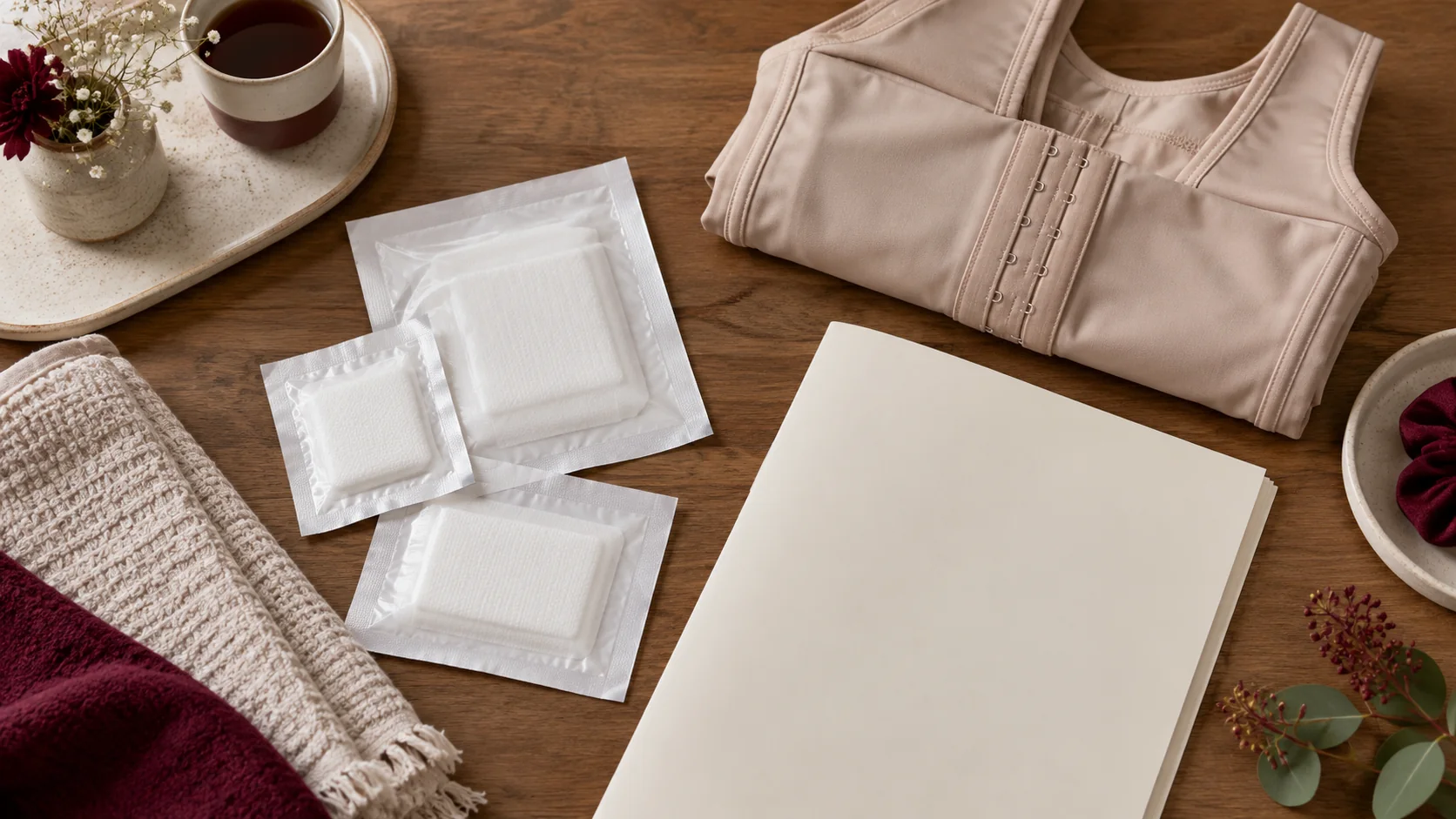
Wound care, dressings and compression garments should follow instructions tailored to your operation, skin and stage of healing. Before surgery abroad, ask for a clear written plan that explains who reviews the wound, which supplies are needed and what should happen if something changes. Another patient's garment or dressing routine may address a different problem.
For an international patient considering Santos, good preparation also covers access to appointments and the information needed when returning home. These details belong beside the operative plan and quotation. Our recovery and return-home guide shows how aftercare fits into the wider decision. The questions below help make that conversation precise without prescribing a dressing technique, compression pressure or universal schedule.
What should written wound-care instructions actually explain?
Ask the team to identify each incision or treated area and explain its particular care needs. The plan should distinguish what you are expected to do from tasks reserved for a clinician. It should also identify the next review, how to obtain help with a problem and which changes should prompt earlier assessment.
A useful document uses names you recognize. If there are different dressings, ask which belongs to which area and how the products are identified. Request clarification of unfamiliar terms rather than relying on a translated word that might refer to another material. Keep the final version available to your companion as well as yourself.
The Ministry of Health's safe-surgery protocol treats communication and an agreed recovery plan as part of coordinated care. It does not supply a single home-care routine for every cosmetic operation. Your own plan should therefore connect the actual procedure to the tasks expected after discharge. Ask what would change if the operation, closure method or clinical findings differ from the original proposal. A generic leaflet may be helpful background, but it should not leave the essential decisions unexplained.
Who should change or review a dressing?
Confirm who is responsible before leaving the facility. Some situations involve planned clinical dressing reviews; others may include tasks explained to the patient or companion. Do not assume that a hotel employee, friend or an independently hired service has the training or authorization needed for your care.
If someone is expected to help, ask what instruction they need and whether the task is appropriate for them. Confirm how to obtain a demonstration and how to check that the instructions have been understood. The person helping should know what they must not attempt and when to stop and seek advice.
Anvisa includes patient and family education about dressings and drains in its infection-prevention recommendations. The practical implication is to settle responsibilities and access to support, rather than purchase a large collection of products in advance. Ask whether the planned appointments and supplies are included in the personal quotation or charged separately. If you live abroad, also establish what happens when a dressing still needs professional review near the anticipated return date. Availability must be confirmed directly; it is not established by a website article.
How can I make the instructions understandable across languages?
Ask the clinician to use plain language and to explain the purpose of each step. After the explanation, describe the plan back in your own words: who will help, what needs review and how you will obtain advice. Any mismatch can then be corrected while you are together.
Translation software can help with ordinary vocabulary, but a product name, allergy or instruction about an incision should be checked rather than guessed. Ask which language the records and aftercare instructions can be provided in and whether a qualified interpreter is needed. An English article does not mean the clinical team offers consultations in English.
A systematic review of discharge education found that the evidence for effects on clinical outcomes was uncertain. Clear communication is still a practical requirement for carrying out a plan, but it cannot be advertised as a guarantee against complications. Keep questions focused on your actual tasks: what information must be recorded, whom you should contact and how quickly you should act if a change occurs. If those answers remain unclear, resolve them before agreeing to treatment or travel arrangements.
Why might the plan change after the operation?
An initial discussion describes an anticipated procedure. The final care plan should reflect what was actually performed and what the team observed. Ask whether there were changes to the proposed operation, closure or devices, and whether those changes alter the instructions you received earlier.
Keep the current version clearly dated. If an old consultation sheet and the discharge instructions differ, ask which is applicable rather than combining them. A companion who attended the first consultation may also need the revised explanation. This is particularly relevant when several operative areas have different requirements and a generic instruction could be misunderstood.
At later reviews, ask the team to record any change and the reason for it in language you understand. Recovery does not always progress through identical steps for every incision. A new recommendation need not mean the original treatment has failed, but it should be clear who made the decision and what happens next. If a receiving clinician at home proposes another approach, make the existing records available and ask how the plans can be reconciled. Do not attempt to satisfy contradictory instructions by alternating routines. Clarifying responsibility is usually more useful than collecting more opinions from people who have not examined you.
What questions establish whether a compression garment is appropriate?
First ask why a garment is being recommended for your particular operation. A garment may be intended to support comfort or address a specific postoperative need. That purpose should be explained, together with how the team will assess whether it is suitable as your condition changes.
Ask who selects the size and design, when fit will be reviewed and how to report discomfort or a skin problem. Clarify whether the garment is a surgical support item or a different product prescribed for another purpose. Similar-looking garments are not necessarily interchangeable, and tighter does not automatically mean more effective.
The 2023 practical review of compression in plastic surgery found that evidence varies substantially across procedures and outcomes. Potential benefits must be balanced against discomfort, pressure-related skin problems and other harms. It does not establish one ideal garment or wearing period for everyone. Use that uncertainty to ask about the reasoning behind your plan, rather than decide independently to add, tighten or discontinue a prescribed item. A well-explained recommendation should include a way to review problems, not only a product to buy.
Which garment or skin changes should trigger a call?
Report new or worsening pain, numbness, unusual skin color, blistering, broken skin or marks that concern you under a garment. Seek prompt clinical advice if wearing it becomes difficult or the fit changes noticeably. Severe breathing difficulty, faintness or rapidly worsening symptoms require urgent assessment rather than a routine garment enquiry.
Describe where the problem occurs, whether it relates to a seam or fastening and when it began. Let the team decide whether an examination is needed and what adjustment is appropriate. A photograph may help document the location, but it cannot reliably assess circulation, sensation or deeper tissue problems.
Do not assume discomfort is evidence that the garment is working. Equally, a change does not establish that compression itself is the only cause. Fit, swelling, adhesive reactions, infection and other factors may require different responses. Ask in advance how to obtain advice when the usual clinic is closed. Our warning-sign guide separates potentially urgent symptoms from ordinary administrative questions. Keep that distinction visible in your written plan, especially if a companion is helping interpret unfamiliar instructions.
What should be clarified about drains, sutures and adhesive products?
If a drain, suture or adhesive product will be present after discharge, ask the team to explain its name, purpose and review arrangements. Confirm what information they want recorded and who is responsible for any planned removal. These are clinical decisions, not tasks to copy from a video.
Ask what to do if a drain moves, a dressing becomes unexpectedly wet, an adhesive irritates the skin or you are uncertain whether something has changed. The answer should identify a contact and the circumstances requiring in-person assessment. Do not pull, trim, reposition or remove a device without the treating team's specific direction.
Mention previous reactions to tapes, skin products or dressings before the operation. If you do not know the substance involved, describe what happened and bring any reliable record. Keep future receiving clinicians informed about what was used, especially when products have different names in your home country. It is more useful to have an accurate written description than a bag of unlabelled spare materials. Ask which details belong in the discharge summary so that care remains understandable beyond the original facility.
Why are clean hands and a suitable setting part of the plan?
Anvisa's hand-hygiene resources place hand hygiene among the central practices of patient safety. For a traveler, this means asking how the person providing agreed care will follow the facility's instructions and what a suitable environment requires. It does not mean that gloves or a closed packet alone make any task safe.
Before choosing accommodation, consider whether there is a clean, accessible place for the supplies the team actually recommends. Ask about laundry, storage, rubbish disposal and easy access to a bathroom. If professional care is expected, confirm the arrangements and scope rather than assuming that an ordinary room provides clinical services.
Keep medicines, cosmetics, used clothing and food from becoming mixed with the materials set aside for care. Specific storage and handling instructions should come from the product information and treating team. Do not create improvised sterile equipment or reuse materials because a delivery is inconvenient. If an essential item is unavailable, contact the responsible service for an alternative plan. The cost of reliable arrangements is part of the total trip budget, alongside the surgical fee and transport.
How should bathing, sweat and clothing be discussed?
Ask separately about showering, immersion, drying the operative area and clothing. Clearance for one activity does not imply clearance for another. A waterproof label on a product cannot establish that an incision is ready for a pool or sea, and an outer garment does not remove every exposure or friction concern.
In warm weather, describe practical problems such as sweating, damp clothing or difficulty changing garments. The team can then explain how those situations should be managed within your wound-care plan. Do not add powder, perfume, creams, massage products or scar treatments to a fresh operative area merely because they are sold for sensitive skin.
Choose clothing around comfort and the clinician's restrictions rather than around concealing every sign of recovery. Ask whether fastenings, seams or the effort required to dress could create a problem. If you need help, arrange it before surgery. Our article on sun, heat and coastal recovery explores the setting in more detail. Santos offers a coastal location; it does not provide automatic permission for beach activities during healing.
How should I deal with product substitutions or an unavailable supply?
Ask the treating service before substituting a dressing or garment because a shop has offered something that looks similar. Products may have different materials, adhesives, dimensions or intended uses. A familiar brand from your own country is not automatically equivalent to the item in your instructions.
If availability is a concern, raise it before departure. Record the product's proper name and ask which features matter clinically, whether an alternative has been approved and who can answer a later question. Keep product information in its original form where possible. Do not interpret an advertisement as a prescription or buy an expensive package to avoid asking what is actually needed.
Also clarify what happens if an item becomes damaged, contaminated or no longer fits. The appropriate response may require advice or review, rather than an improvised repair. Ask how long an expected supply is intended to cover while recognizing that the care plan may change. If you return home with a different product recommended by a local clinician, document the new recommendation and share relevant information with the original team. A record of decisions helps everyone understand the current plan. It also prevents a practical purchasing problem from becoming an unrecognized change in clinical care.
What must be settled before taking wound care home overseas?
Before departure, ask whether the next stage of care can reasonably occur at home and who will provide it. Identify any appointment, dressing review, device removal or investigation still required. A flight date should follow clinical assessment and practical arrangements, rather than force them into an unsuitable timetable.
Request a concise handover with the operation date, relevant findings, materials or devices used and the current plan. Include any wound problem, reaction or change already identified. Ask how the receiving clinician can request clarification, and check what language the records will be in. Do not assume distant care is supplied or covered financially.
The SBCP liposuction patient guide emphasizes understanding recovery, assistance and follow-up as part of the procedure discussion. The exact needs still depend on your operation. Keep enough flexibility to remain for assessment if the plan changes. Confirm where you would obtain appropriate supplies at home and whether a local clinician has agreed to the expected review. A promise that you can simply send photographs should not replace an arrangement for necessary examination.
How can I compare aftercare value before deciding on surgery?
Ask for a personal quotation that distinguishes the operation from garments, dressings, appointments, additional procedures and other care. Confirm which items are included, which may be needed only in particular circumstances and who can explain an unexpected charge. Avoid comparing two headline fees as though the recovery arrangements are automatically identical.
A practical consultation list can be short: what is the purpose of each item; who teaches me to use it; what changes require a review; and what happens if I cannot follow the plan? Add your actual circumstances, including travel distance, living arrangements, skin sensitivities and help available at home. These details may affect whether the proposed route is suitable.
Read the guide to comparing individualized quotes and the discussion of accommodation and a companion in Santos before committing to nonchangeable bookings. When contacting Dra. Flávia Pacheco's practice, ask about the specific assessment and arrangements you would need. Clear answers can make the value of a proposed plan easier to understand, while leaving space to postpone treatment if responsibilities or access to care remain uncertain.
References
- Anvisa: Controle da infecção hospitalar — prevenção é fundamental
- Anvisa: Higiene das mãos
- Ormseth et al.: The Use of Postoperative Compression Garments in Plastic Surgery — Necessary or Not? A Practical Review (2023)
- Gillespie et al.: Effectiveness of discharge education for patients undergoing general surgery — A systematic review and meta-analysis (2023)
- Ministério da Saúde: Protocolo para Cirurgia Segura
- Sociedade Brasileira de Cirurgia Plástica: Lipoaspiração